
Single-family home
Shift some solar energy into the evening and plan for new loads.
What we assess
Daily profile, PV output, heat pump, charging and usable capacity.
Battery storage · Coordinated design
We design storage around your building, solar generation and consumption. The heat pump, photovoltaics, battery and energy management form one technically and economically coordinated solution.
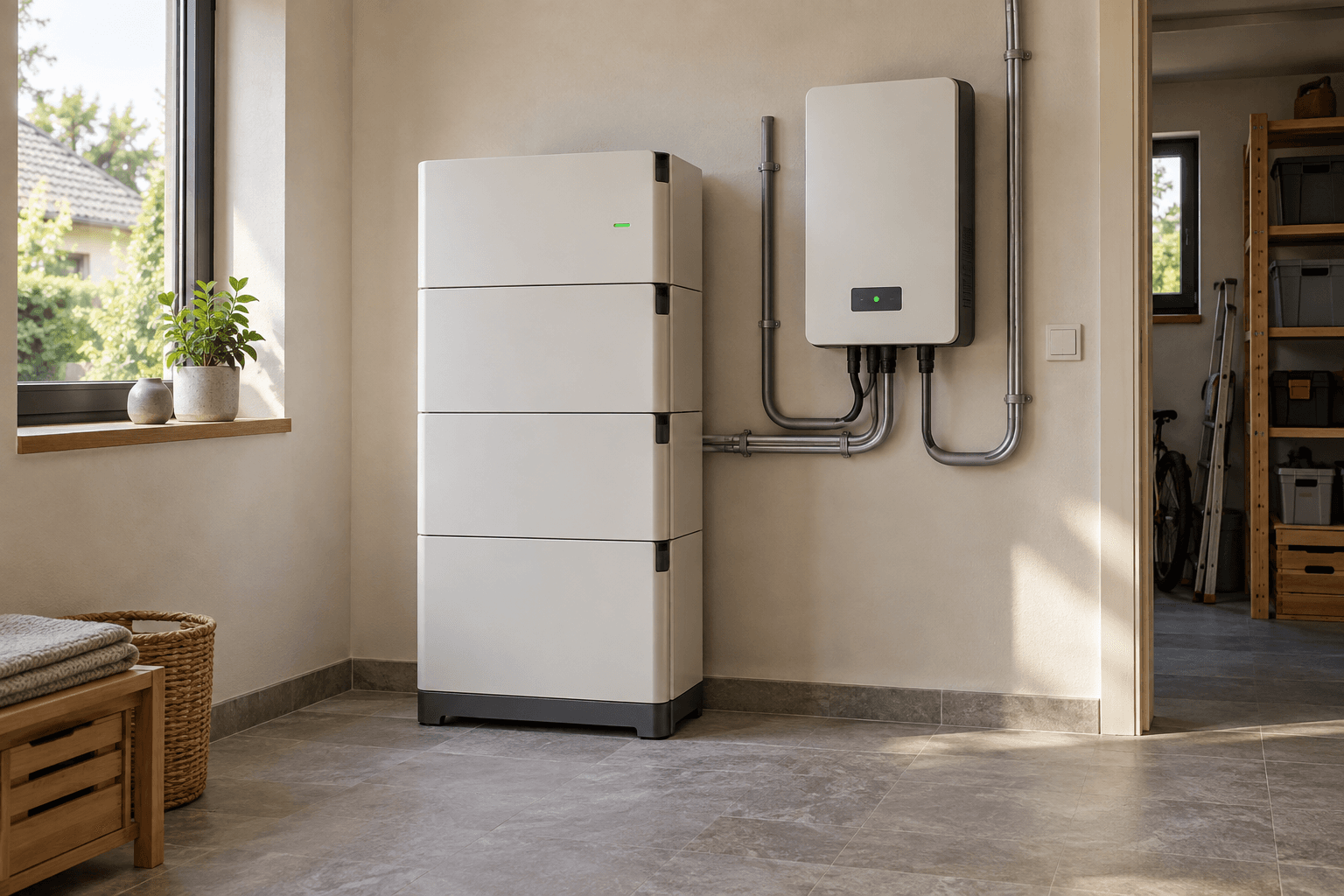
01 / Battery storage
Generation and consumption change throughout the day. Controls coordinate direct use, storage and grid supply according to actual conditions.
PV → building → battery / grid
PV supplies active loads. Surplus can charge the battery; remaining surplus is exported or controlled according to the system.
Illustrative operation, not a yield or self-sufficiency calculation. The grid connection remains part of the system.
02 / Find my application
We select the solution for your use and building, independently of the manufacturer and alongside the other components.
Shift some solar energy into the evening and plan for new loads.
Daily profile, PV output, heat pump, charging and usable capacity.
Coordinate shared generation and different consumption groups.
Metering, supply design, common areas, apartments, central heat pump and billing.
Match storage to operating hours, demand peaks and future use.
Load profiles, connection capacity, tariff structure and the economics of reducing peaks.
Add compatible storage to an existing PV installation.
Inverter, interfaces, current self-consumption, installation space and expandability.
Coordinate temporary supply with mobile PV and other sources.
Peak power, operating time, charging source, transport, site conditions and backup supply.
Define which loads should keep operating during a power outage.
Switching, battery reserve, grid isolation and heat pump compatibility in backup operation.
03 / kWh + kW
Annual consumption or PV capacity alone is not enough. We compare the system with and without storage, then assess different sizes.
Energy available for later use, allowing for reserves and operating limits.
Which simultaneous loads the system can supply. Inverter capability and peak demand matter too.
Assess conversion losses, controls and standby consumption against the demand profile.
Compare investment, operation, ageing and warranties; returns depend on the project.
04 / What we assess
For a new installation or retrofit, inverter, battery and communication interfaces must be compatible. We assess expansion before replacement.
A separate battery inverter can complement existing PV. We assess overall compatibility and the additional conversion stages.
PV and battery can work through a compatible hybrid inverter. Voltage ranges and approved battery combinations are essential.
We compare systems by usable capacity, power, installation requirements and warranty. Additional modules must be approved for the existing system.
05 / Battery storage · Coordinated design
We assess electricity and heat together. Depending on demand, using solar directly for the heat pump or charging may make sense before storing it.
Calculate generation and usable surplus.
02Coordinate heating demand, electricity use and operating times.
03Coordinate charge level, consumption and priorities.
A home battery does not bridge an entire heating season. Winter heating demand and summer solar surplus need separate assessment.
06 / Request a system assessment
Assess building, heating demand, electricity profile and equipment.
Calculate PV self-consumption and compare options with and without storage.
Design storage, heat pump, metering and controls together; assess cascades for larger buildings.
Discuss economics and potential funding, coordinate installation and commissioning.
No. Without sufficient surplus to charge it or suitable later demand, extra capacity may be underused. We assess energy capacity and power using your profiles.
No. Backup requires suitable components and a dedicated installation design. We separately define supported loads and the necessary reserve.
In a suitable system it can cover part of its electricity demand. Power, charge level and season limit its contribution. Backup operation requires a separate assessment.
Battery storage
Location, consumption, existing PV and heating help us understand your needs. We also include future heat pumps and charging points.
Your selection is included in your email app. Complete your details before sending.