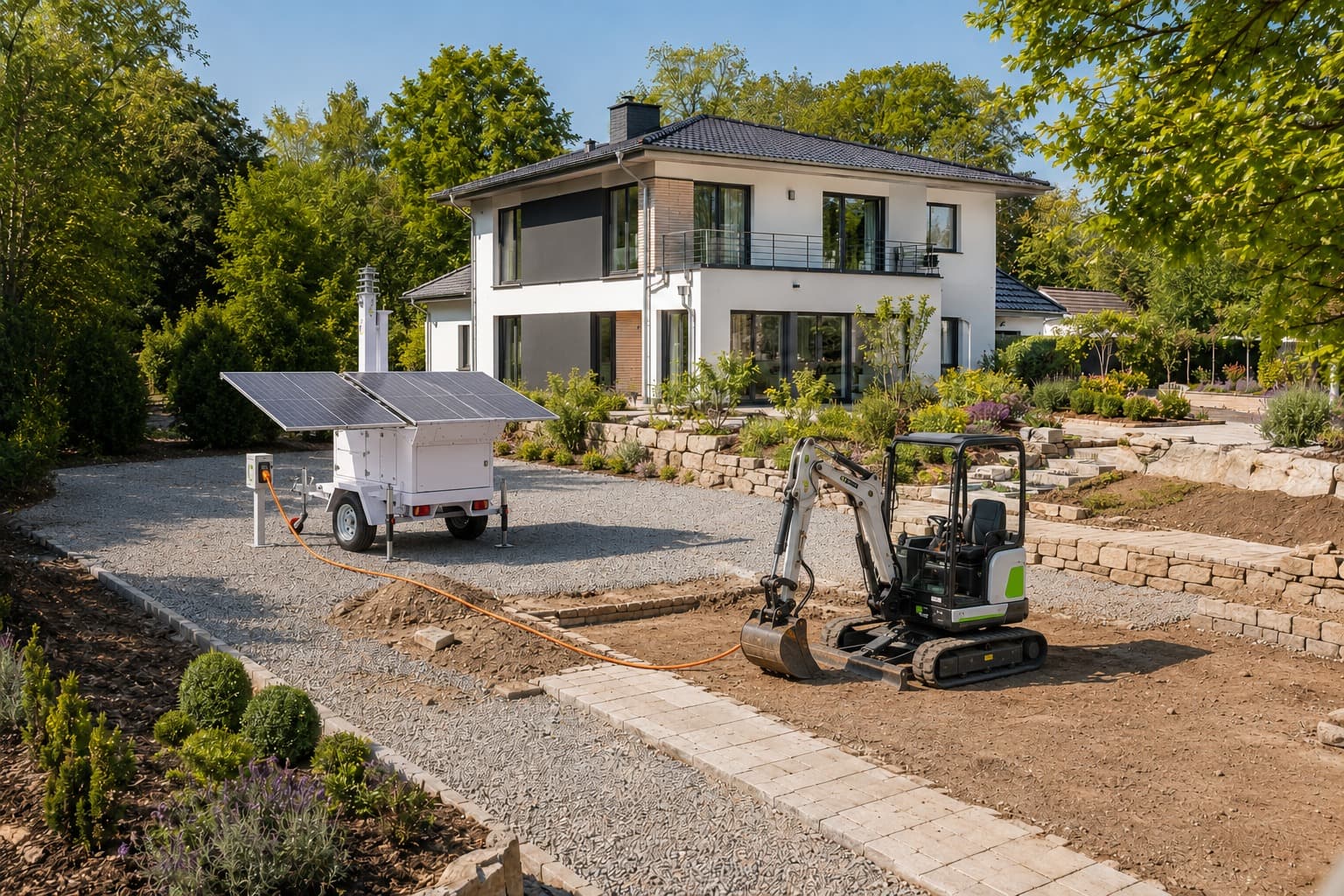
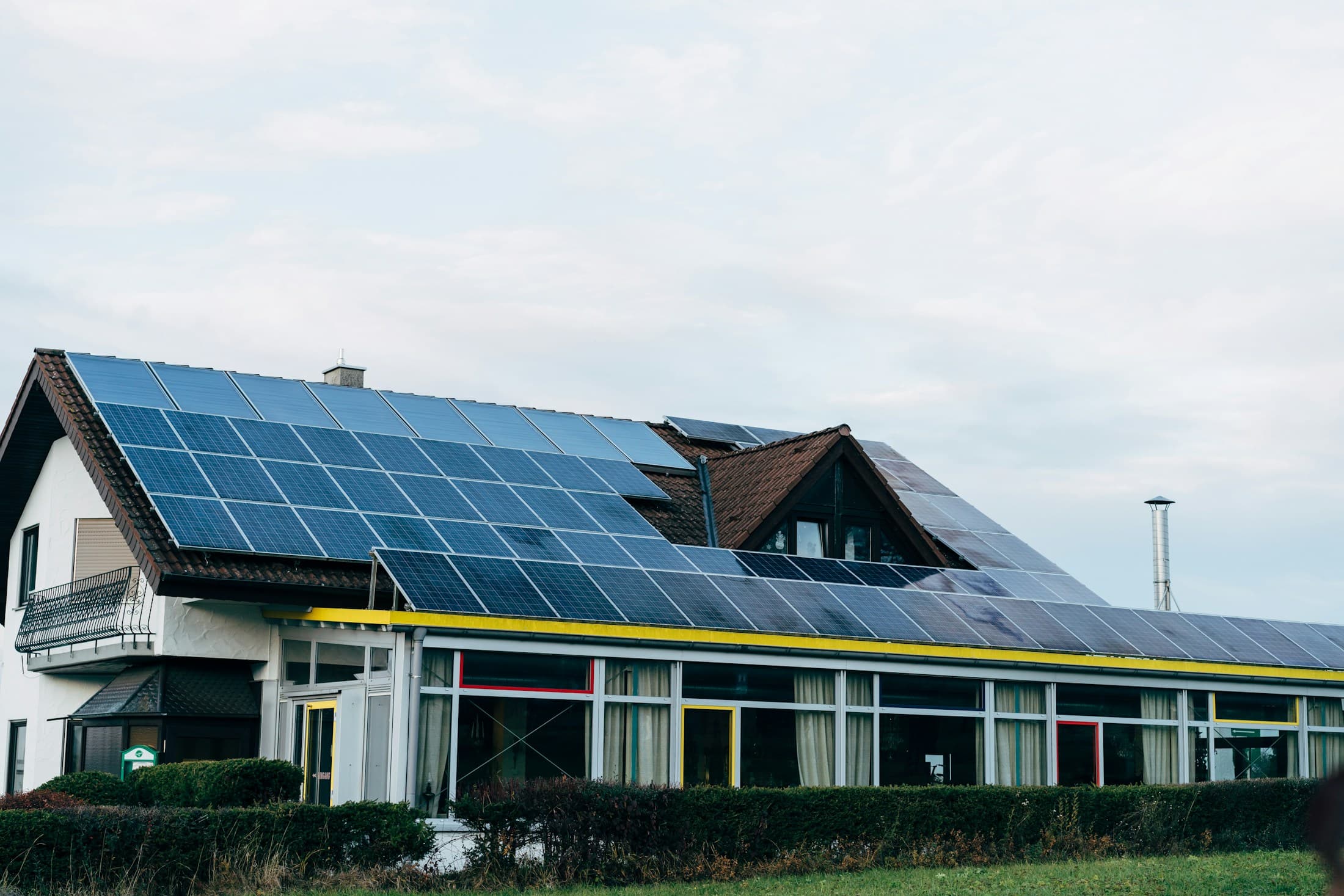
Pitched-roof PV
Established solar generation for residential and business roofs.
What we assess together
Roof condition, structural capacity, shading and heat pump self-consumption.
Photovoltaics · Energy system design
Your building, heating demand and electricity use are our starting point. We design photovoltaics, the heat pump, battery storage and intelligent controls together.
01 / Energy management
We size the components around your building and its future uses.
Assess available space, orientation, shading and hourly generation.
02Estimate heating demand and anticipated electricity consumption.
03Match capacity to solar surplus and later demand.
04Coordinate generation, heating, charging and consumption.
An annual energy balance is not enough: heating demand is greatest in winter, while solar generation is higher in summer. Battery storage shifts some energy over time; on its own it does not provide seasonal storage.
02 / Photovoltaics
From established installations to newer concepts: explore the main solution families. Feasibility depends on the site and a technical assessment.
12 solutions
Established solar generation for residential and business roofs.
Roof condition, structural capacity, shading and heat pump self-consumption.
Mounted modules with an orientation tailored to the site.
Loading, wind, waterproofing, maintenance access and demand profile.
PV on façades or integrated into the building envelope.
Coordinate architecture, shading, safety and envelope performance.
Small solar areas for part of everyday electricity demand.
Check mounting, connection and building context within the overall energy balance.
Cover parking spaces while generating electricity.
Coordinate structure, drainage, vehicle charging, storage and grid connection.
Solar generation on suitable land outside the building.
Assess land use, ground conditions, grid capacity and how the output will be used.
Combine farming and solar generation on the same land.
Prioritise crops, light requirements, machinery access and continued agricultural use.
Relocatable configurations for temporary applications.
Assess transport, setup, peak loads, operating time, storage and backup supply.
Transportable modules that unfold or slide out at the point of use.
Check space, wind, anchoring and coordination with storage and the grid.
Lightweight or portable solutions for limited and specialised uses.
Check actual energy demand, durability, mounting surface and electrical compatibility.
A specialised installation concept for suitable water bodies.
Assess water use, environment, anchoring, access and connection for each project.
Hybrid collectors combine electrical generation and thermal solar energy use.
Design the heat source, hydraulics, storage and a compatible heat pump together.
03 / Mobile use
Mobile and folding systems are sized around equipment demand, operating hours and connection options.
A trailer configuration for assessing temporary supply with suitable storage.
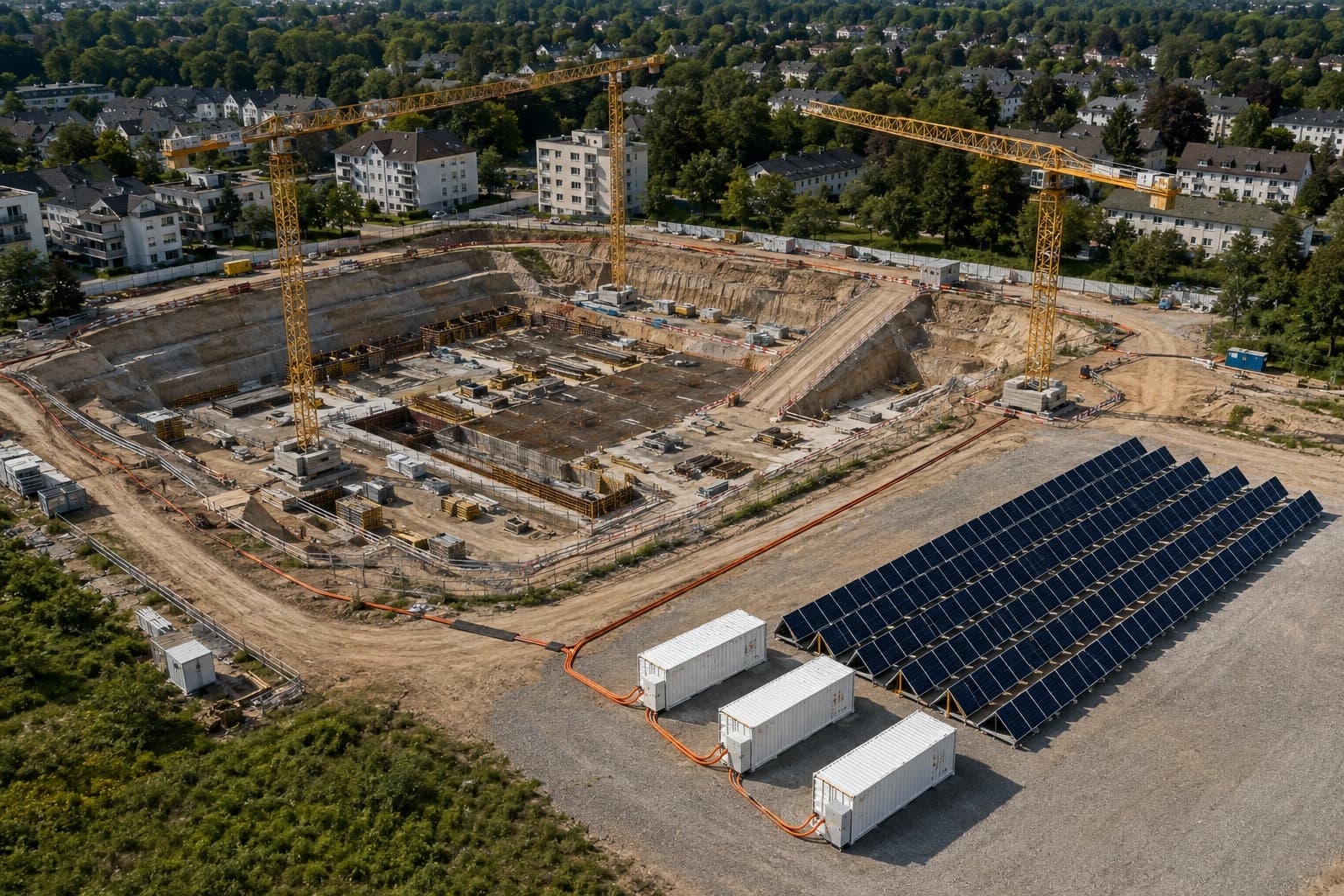
Deployable modules and storage coordinated with construction demand and other energy sources.
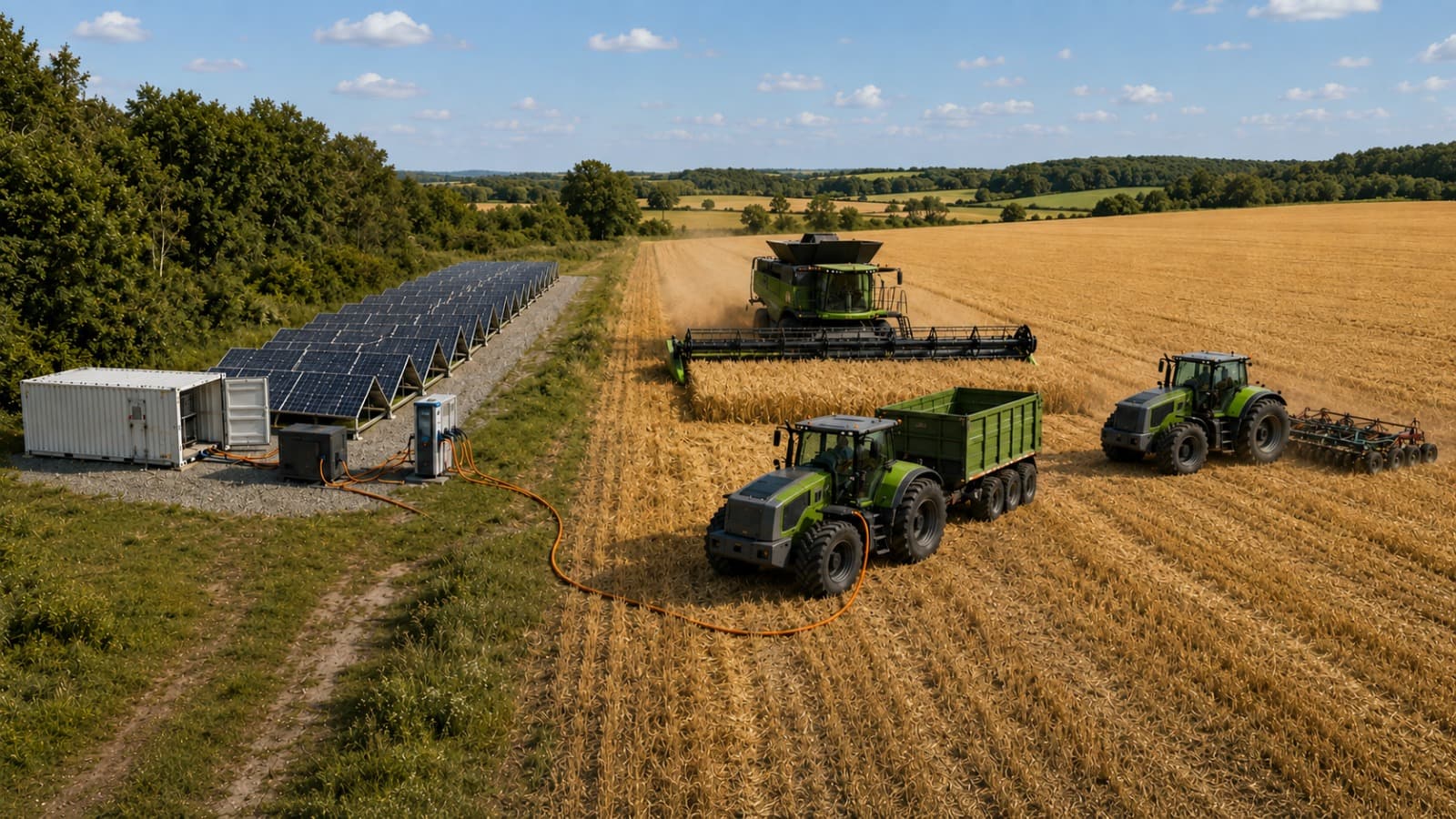
Generation close to use, with seasonal demand, storage and compatible equipment assessed together.
Provided illustrations of possible uses; these are not completed project references or performance guarantees.
04 / PV
Roof, parking area or container describes the installation. Cell and module technology is selected as part of the design.
Monocrystalline, polycrystalline and PERC modules are part of the installed base. Condition and output matter alongside age.
Different cell architectures assessed using actual module specifications, available space, temperature behaviour and cost.
Use light on both sides. Additional output depends on the ground surface, clearance and shading, among other factors.
Module construction and cell material are separate decisions. Weight, mounting and operating conditions determine suitability.
New cell combinations are an evolving field. Actual availability, certification and operating evidence need checking for each project.
05 / Photovoltaics
An older installation may still be useful. We assess its condition, output, inverter and changing needs before recommending retention, extension or replacement.
06 / Discuss your project
Assess the building, heating demand, electricity profile, available space and future uses.
Calculate heat pump consumption, solar generation and self-consumption using demand profiles.
Select components, storage and controls; assess tenant solar supply and heat pump cascades where relevant.
Compare economics, advise on funding opportunities and coordinate implementation.
Photovoltaics · Energy system design
Tell us the location, use, consumption and existing equipment. We can identify what needs to be assessed together.
Your email app opens with your selected solution. You can complete the message before sending it.